Carpet Cleaners Houston: Protecting Your Investment

Living with carpet in Houston is not the same as living with carpet in Denver or Phoenix. Our city swings from steamy to soaked, tracks in Gulf humidity, and collects fine dust that drifts in with each bay breeze. Air conditioning runs hard much of the year, windows are opened on so few perfect days that indoor air can feel stale, and our four-legged family members consider damp yards an invitation to redecorate. Carpets bear the brunt. If you want your flooring to look good for a decade or more, you need a strategy that combines good daily habits with a smart partnership with professional carpet cleaners. Houston homeowners who treat carpet as an investment, not a consumable, get more life and less headache for their money.
I’ve spent years working with residential and commercial clients across Harris, Fort Bend, and Montgomery counties, watching what actually prolongs carpet life. The patterns are clear. Regular vacuuming is essential but insufficient. Spot treatment matters, but only when done promptly and with the right chemistry. And professional maintenance at the right intervals is what keeps modern synthetic fibers from matting, locks in color, and deters the musty odors that creep in when Gulf moisture lingers under the surface.
What makes Houston carpet different
Houston’s climate puts constant pressure on residential carpet. Humidity averages high most months. Even on pleasant days, indoor relative humidity often sits above 55 percent, which is borderline for microbial growth inside carpet backing if spills or pet accidents aren’t thoroughly extracted. We also have fine particulate dust that behaves differently than larger grit. It sifts deep into the pile and sits close to the backing, where foot traffic cuts it into fibers like sandpaper. A vacuum can improve appearance while leaving the dangerous fines deep in the base of the yarn.
Then comes storm season. A normal afternoon downpour can hike indoor humidity quickly. A leaking door threshold or briefly open garage can wick moisture under area rugs or along room edges. If you’ve had even a minor AC condensate line overflow, you already know how fast carpet can sour. The point is not to fear moisture, but to have a plan. That plan starts with consistent upkeep and a schedule with a trusted carpet cleaning service Houston homeowners can reach quickly when something goes wrong.
How often should you clean
Manufacturers give broad guidance: every 12 to 18 months for typical residential use. In Houston, that’s optimistic for many households. If you have children, pets, or high-traffic zones from kitchen to living room, a nine- to twelve-month professional cleaning schedule is more realistic. Consider traffic lanes like the path from the garage entry to the family room, and the edges around favorite sofas. Those areas break down first and telegraph the age of the whole room. If you keep those lanes groomed and cleaned more often, the entire space looks fresher.
I’ve had clients in Bellaire and Pearland with two large dogs who call for cleaning every six months. Their carpet still looked presentable after eight years because they never let grit accumulate. Conversely, a high-rise unit in River Oaks with low foot traffic could go 18 months without a full cleaning, focusing instead on quarterly maintenance of entryway lanes. The right frequency is driven by your household patterns, not a calendar printed on a warranty card.
Vacuuming well, not just often
Vacuuming is the first line of defense. Not carpet cleaners for pets all vacuums perform the same on carpet. You want a unit with a brush roll that can be height-adjusted to the pile and enough suction to pull fines up from the base. Too many homeowners run a high-powered vacuum with the roller set too low, which flogs the yarn and fuzzes the tips. Aim for slow, overlapping passes in both directions on traffic lanes. And don’t forget perforated areas like stairs, which take concentrated wear in the center of each tread.
Vacuum at least twice a week in main living spaces. During pollen season or when pets shed heavily, add a midweek touch-up. Replace or wash filters on schedule because a clogged filter drops suction and leaves fines behind. If your home includes wool area rugs over carpet, lift and vacuum under them occasionally. Dirt that migrates through a rug can sand the carpet pile underneath.
The science under your feet
Most broadloom carpet in Houston homes is nylon or polyester. Nylon is resilient, resists matting, and responds well to professional cleaning. Polyester holds color beautifully and is more stain-resistant out of the box, but it can mat under heavy traffic and is more sensitive to oil-based soils. Both need periodic hot water extraction to reset the pile and flush the base.
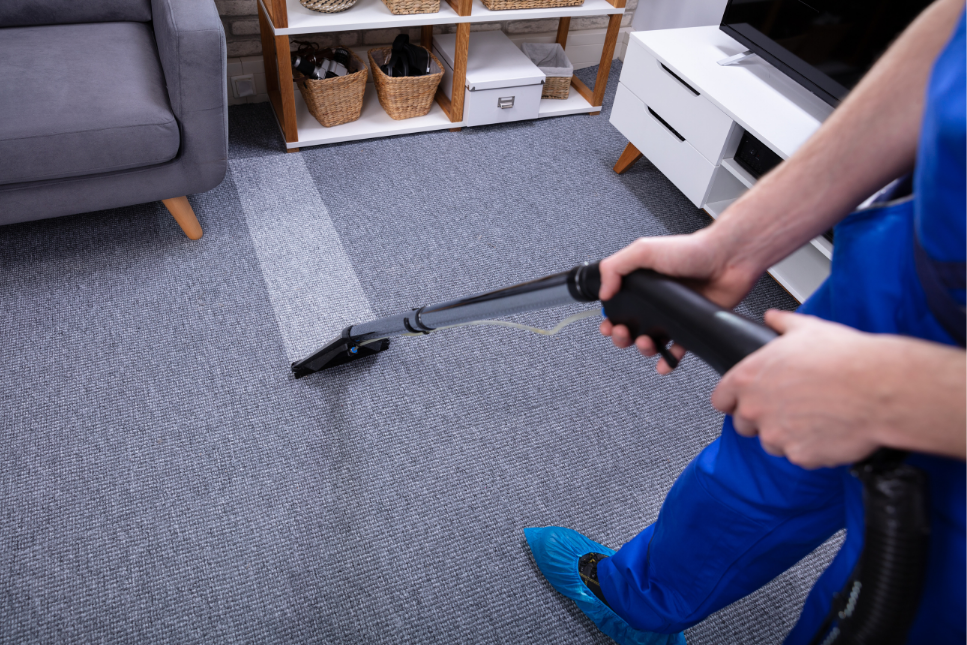
Hot water extraction, often called steam cleaning, is the method most carpet mills recommend. It uses heated water under controlled pressure with a recovery system that lifts soil and rinse water back out. The heat helps loosen oily soils and kills odor-causing bacteria. The key word is controlled. Too much water without adequate extraction can leave the carpet damp for days, especially over pad on a slab, which invites wicking and odor. A skilled technician balances heat, flow, and vacuum to clean deeply and leave carpets touch-dry within hours.
Low-moisture methods, like encapsulation, can be excellent between deep cleans or for commercial glue-down, but they are not a complete substitute for periodic hot water extraction in residential carpet. In our market, a balanced plan uses both: interim low-moisture maintenance on traffic lanes every few months, with full extraction annually.
What a professional service should actually do
When you’re evaluating carpet cleaners Houston has no shortage of options. Prices range widely, and so does workmanship. A good carpet cleaning company Houston residents can trust does more than run a wand. They:
- Inspect and measure rooms, identify fiber type, and test for colorfastness, using their notes to tailor chemistry and pressure.
- Pre-vacuum if your vacuuming missed obvious debris, because dry soil removal is half the battle.
- Pre-treat traffic lanes and spots with the correct solution for the soil type, giving it dwell time to work.
- Agitate the pre-spray mechanically in heavier lanes to bring soil to the surface.
- Extract with properly heated water, control the wand for even passes, and make extra dry strokes to speed drying.
Those five steps determine results more than any slogan on a van. If a crew skips pre-vacuuming and pretreatment, extraction becomes a splash-and-dash that drives soils deeper and leaves residues that re-soil quickly. Ask to see their moisture meters and infrared thermometer. If they mention air movers, that’s a good sign. Professional carpet cleaners who carry axial or centrifugal fans can cut dry times dramatically, which matters in humid weather.
Chemistry that makes or breaks an outcome
Household spotters on a big-box shelf are designed not to hurt anything, which means they often fail to remove the source of stains and sometimes leave sticky residues that attract more dirt. That is why pet stains seem to reappear within days. Pros carry a range of solutions fitted to the problem: solvent boosters for tracked oils from a garage, protein removers for food, enzyme digesters for urine, rust removers that won’t strip dye, and reducers for tannin or coffee. The art lies in choosing the mildest product that will do the job, then thoroughly rinsing it out to neutral.
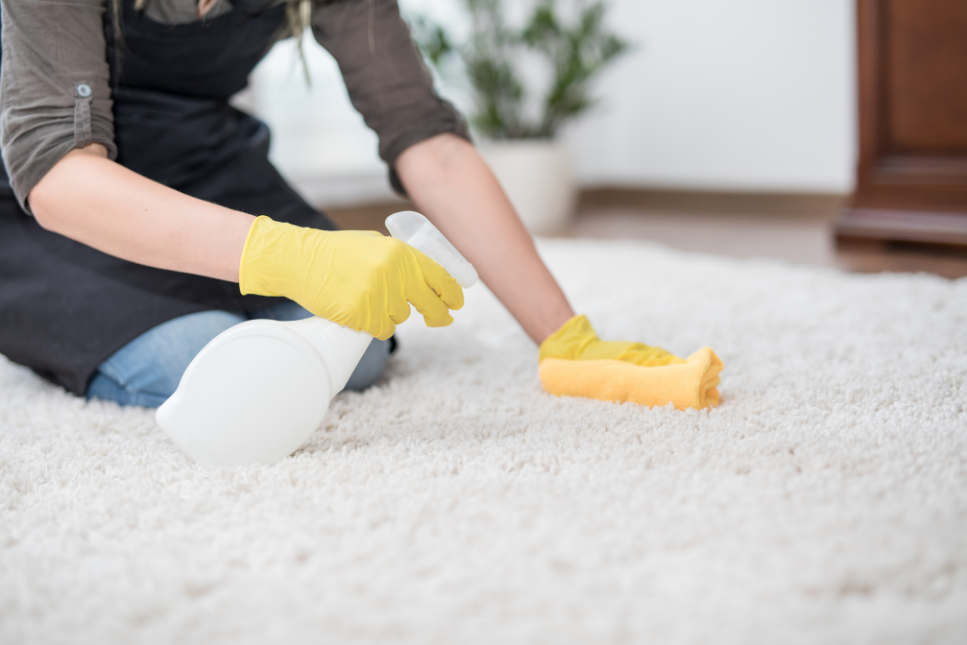
If you want to keep a home kit, choose a neutral pH spotter and a dedicated enzymatic product for pet accidents. Avoid optical brighteners. And avoid scrubbing spots with stiff brushes that fuzz the fiber. Blot, tamp gently, and call for help when a stain is larger than your hand or smells strong. A quick photo texted to a carpet cleaning service Houston homeowners rely on can save a permanent stain. Technicians can advise whether to keep it damp until they arrive or to neutralize it with a household solution.
Drying quickly matters in our climate
Dry time is not a vanity metric. The longer carpet stays wet, the higher the chance of wicking. That’s when a stain you thought was gone creeps back as moisture rises from the backing and pad, carrying dissolved residues with it. Houston humidity exaggerates the problem. A good cleaning refrains from saturating the pad in the first place, then uses air movement and, when practical, dehumidification to close the window quickly.
Leave ceiling fans on and HVAC running after a clean. If you can, set the AC to a cooler temperature than normal for a few hours, which increases moisture removal. Crack a window only if outdoor humidity is lower than indoor, which in Houston is not common. Most homes see faster drying with the AC cycling and interior doors open. Ask your cleaner to place a few air movers on the worst lanes at the end of the job. Thirty minutes of directed airflow can shave hours off dry time.
Scotchgard and protectors, when they help
Protective treatments can be worthwhile on nylon carpet, particularly in dining areas and at the entrances where gritty soils hit first. These fluorochemical protectors help spills bead up and give you a minute to blot before they set. They also reduce absorption of oily pollutants, which drive re-soiling. In my experience, protectors are most cost-effective when applied to new carpet or right after a professional clean and groom. Expect them to wear off in the highest traffic lanes within 12 months, faster under rolling office chairs.
Polyester fibers already resist water-based stains well. Adding protector on polyester is less impactful, but can still help with oily soils. Be wary of exaggerated claims. Protector is not armor. It improves your odds in the first few minutes of a spill and makes future cleanings more effective.
Pet households: the honest approach
Pets change the math. A single small dog or cat might only add a few extra spots each year. Multiple pets, especially large breeds, can create persistent odor issues in certain rooms. Urine that reaches the pad will continue to off-gas until fully neutralized. Surface cleaning can make the carpet look fine for a week, then the smell returns during a humid spell.
There are three tiers of response. First is topical enzyme treatment and extraction, the fastest and least invasive. It works for fresh accidents that have not soaked deeply. Second is sub-surface extraction with a flood tool that pulls solution through the carpet and pad to the subfloor, which can neutralize odors without pulling carpet. Third is a full restoration, lifting the carpet, treating or replacing the pad, sealing the slab with a urine-blocking primer, and reinstalling and cleaning. In older rentals in the Heights, I have done all three in the same home on different rooms. A reputable carpet cleaning company Houston pet owners can trust will walk you through options with clear costs. They won’t promise miracle results from a quick surface clean when the pad is the actual source.
Floods, leaks, and the 48-hour rule
Houston’s gift and curse is rain. If you’ve experienced a minor water intrusion from a door sweep failure or a laundry hose, act fast. If the carpet is saturated and you can squish water with your foot, call a water mitigation firm or a carpet cleaner with extraction equipment immediately. The first 24 to 48 hours are the window to prevent microbial growth. Pull baseboards if necessary, set up dehumidifiers, and target a return to normal moisture within two days.
If water came from a clean source and you act quickly, many carpets can be saved. If water came from a storm drain backflow or any source you’d hesitate to touch with bare hands, consider disposal and replacement. No cleaning is worth risking health. Most reputable carpet cleaners Houston homeowners rely on will tell you where that line is and refer you to mitigation specialists when the job exceeds normal cleaning.
Choosing the right partner
The difference between average and excellent carpet cleaners shows up six months after the truck leaves. Cheap detergents and poor rinsing leave sticky film that makes carpet look dirty quickly. True professionals invest in training, maintain their equipment, and choose chemistry that cleans and then lets go.
When you vet a carpet cleaning service Houston offers, look for indicators that they take the craft seriously. Ask about:
- Training and certifications, especially with IICRC coursework in carpet cleaning and odor control.
- Equipment type. Truck-mounted extractors remove more moisture than most portable units and are preferred for residential, though well-maintained portables have a place in high-rise buildings.
- Dry-time expectations and what they do to accelerate drying on humid days.
- Written prices that are room-based or square-foot-based without vague “starting at” hooks, and whether they include standard pre-spray, moving light furniture, and basic spotting.
I’ve watched homeowners pay the same total price to two different providers and get wildly different outcomes. The crew that spends time on inspection, pre-treatment, and controlled extraction wins every time. If a technician recognizes your fiber type at a glance, discusses previous cleanings, and sets realistic expectations, you’re probably in good hands.
Residential carpet cleaning in Houston apartments and high-rises
High-density living changes logistics. Many buildings limit truck-mount access, so pros must use high-performance portable extractors and bring heated water via onboard units. Hallway protection becomes critical. Request that your cleaner pad and protect elevators and corridors. Schedule during hours allowed by management, and plan for added setup time. In River Oaks and Downtown towers, the best teams run a staging area in a service corridor with containment to prevent dripping hoses.
Dry times can be longer in sealed units that exchange less air with the outside. Ask the crew to leave a small air mover in the unit while they clean other floors, or plan to use your own fans and run the HVAC longer on cleaning day. Done well, even a portable-based clean in a high-rise can rival truck-mount outcomes, but only if the team respects prep and drying.
When replacement makes more sense
Not every carpet is worth saving. Polyester with crushed traffic lanes that don’t rebound after grooming is nearing the end. Delamination, where backing separates from the primary layer, shows up as ripples that return after stretching. Repeating pet stains that wick up weeks after a deep treatment often signal urine saturation in the pad and subfloor.
Before you call it quits, ask a seasoned cleaner to do a restorative attempt on a test room. I’ve seen $250 spent on a focused restoration buy a family another year to plan for replacement, which beats rushing into a carpet decision. But if the backing is compromised or odor is embedded in the slab, put good money after good materials instead of after cleaning.
Pricing realities, without the gimmicks
Pricing varies by room size and service level. In greater Houston, you’ll see advertised specials as low as 20 to 30 dollars per room, which almost always balloon with add-ons and per-spot charges. Realistic pricing for proper hot water extraction with pre-treatment, agitation on traffic lanes, and basic spotting typically runs 40 to 75 cents per square foot of cleaned area, depending on soil level and access. Pet treatments, protector application, and speed-drying add to that.
Transparent companies measure or at least pace off rooms, subtract large furniture footprints that will not be moved, and give you a written number before work begins. Good crews move light furniture like end tables and chairs, place sliders under heavier pieces, and reset the room with protective tabs under legs. If someone best carpet cleaning in Houston refuses to measure or pressures you with limited-time upsells, trust your gut and send them on their way.
A simple home maintenance rhythm
You don’t need a complicated plan to keep carpet in top shape. Keep it clean at the surface, respond quickly to accidents, and refresh it professionally before it looks terrible. Here is a short, workable rhythm that fits Houston realities:
- Vacuum main areas twice weekly and bedrooms weekly. Slow passes on traffic lanes.
- Treat fresh spills within minutes. Blot, don’t scrub. Keep a neutral spotter and a pet enzyme on hand.
- Every three to four months, schedule a quick low-moisture maintenance for traffic lanes if you host often or have pets.
- Once a year, book a whole-home hot water extraction with a reputable carpet cleaners Houston team, timed around humidity. Late fall and winter often yield faster dry times.
- Run AC and fans after any cleaning until carpet is fully dry to the touch, usually within four to eight hours when done correctly.
Follow that, and most carpets will stay attractive for a decade. Ignore it, and you’ll see the telltale gray paths and sour edges in half that time.
A few local edge cases worth noting
Houston homes on slabs can feel cooler at floor level, which tempts some folks to push thermostats higher in summer. That raises indoor humidity. If you nudge the thermostat up while away for days, run a dehumidifier or set the system to manage humidity, not just temperature. Otherwise, microclimates near exterior walls and under furniture can become musty.
Homes with radiant heat from southern exposure through big windows sometimes develop hard, sun-exposed traffic lanes where fibers are slightly embrittled. Those areas clean better with lower mechanical agitation and cooler rinse water to avoid tip bloom. Mention sun exposure to your technician.
If you have newly installed carpet, ask your installer whether the mill requires professional cleaning within a certain window to maintain warranty. Some do. Keep invoices and note methods used, like “hot water extraction” or “encapsulation,” in case you ever need to file a claim.
What sets excellent cleaners apart
The best carpet cleaning company Houston homeowners can rely on tends to exhibit the same habits. They show up on time. They protect entryways and corners with guards. They measure, identify fiber, and test colorfastness before applying anything. They work methodically, not in frantic sweeps. They invite questions and encourage you to walk with them for a final inspection. And they follow up, especially after serious odor treatments or flood work.
If you ever feel the need to hover, you picked the wrong company. With the right team, you can step out for an hour and return to carpets that look revived, feel soft underfoot, and dry fast enough to host dinner the same evening.
The investment payoff
Carpet gets dismissed as disposable, yet replacing it across a typical 1,800 square foot home can run five to fifteen thousand dollars depending on quality, pad, and installation. Stretch its life by just three years and the math favors better maintenance. More than the dollars, clean carpet improves indoor air quality and daily comfort. Kids spend hours on those floors. Pets nap there. You walk barefoot every morning to make coffee. Those routines feel better on carpet that smells fresh and looks cared for.
Houston makes you earn that feeling, with humidity, sudden rains, and red clay from ballfields conspiring against it. The good news is that the path to long carpet life is straightforward: vacuum with intent, treat spots right away, and choose carpet cleaners who know this city’s quirks. When you find a carpet cleaning service Houston neighbors recommend for showing up after a leak or a pet snafu, keep them. A dependable partner turns carpet from a chore into an asset you can count on.
Investing in skilled help is not indulgence, it’s stewardship. Clean, well-maintained carpet pays you back each time you walk across it and don’t think about the floor at all. That’s the quiet luxury of a home that’s looked after, from the slab up.
Green Rug Care, Rug Cleaning Houston
Address: 5710 Brittmoore Rd, Houston, TX 77041
Phone: (832) 856-9312
Green Rug Care
Green Rug Care is a leading area rug cleaning company with over 35 years of experience, offering professional rug cleaning, repair, and pet odor removal using eco-friendly, non-toxic products. Free pickup and delivery available.
Houston, TX 77041
US
Business Hours
- Monday: 8:00 AM – 8:00 PM
- Tuesday: 8:00 AM – 8:00 PM
- Wednesday: 8:00 AM – 8:00 PM
- Thursday: 8:00 AM – 8:00 PM
- Friday: 8:00 AM – 8:00 PM
- Saturday: 8:00 AM – 8:00 PM
- Sunday: 8:00 AM – 8:00 PM